
How to Improve Your Car’s Trade-In Value Before an Appraisal
A trade-in offer reflects more than the badge and model year. Mileage, condition, specification, service history, reconditioning requirements and current market demand all influence what a dealer can offer. You cannot control every factor, but you can make the vehicle easier to assess and remove avoidable reasons for a lower valuation.
Start with realistic market research
Compare advertised vehicles with the same generation, variant, transmission, year and similar mileage. Do not use the highest asking price as the expected trade value: a dealer must still inspect, prepare, market and carry the vehicle, and advertised retail prices are not confirmed sale prices.
Obtain more than one written appraisal if practical, but compare the complete changeover amount when buying another vehicle. A high trade-in figure can be offset by less discount elsewhere in the deal.
Gather the vehicle’s history
Organise service records, repair invoices, manuals, spare keys and information about the remaining warranty or service plan. If services are stored digitally, ask the servicing dealer how the history can be verified. Record completed recall work and keep supporting evidence for major repairs.
Transparent records reduce uncertainty. Missing documentation does not prove poor maintenance, but it makes the vehicle harder to value confidently.
Fix small, obvious problems selectively
Replace inexpensive missing items and attend to simple faults such as blown bulbs, worn wiper blades or an empty remote battery. Correct dashboard warning lights should be professionally diagnosed rather than cleared temporarily. Consider repairing windscreen chips where appropriate and checking wheel alignment if tyre wear or steering suggests a problem.
Avoid spending heavily without first understanding whether the repair will add equivalent value. Ask the appraiser whether a costly dent, wheel refurbishment or tyre replacement is likely to improve the offer enough to justify the expense.
Present a clean, complete car
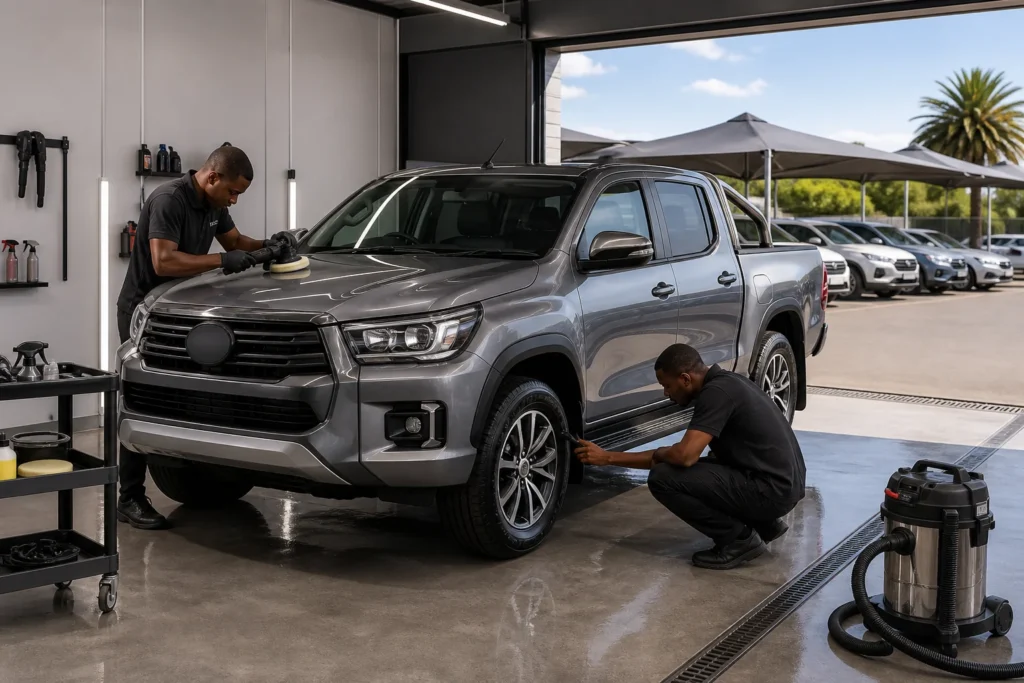
Wash the exterior, clean the wheels and glass, vacuum the interior and remove personal items. Empty the luggage area but leave the spare wheel, tools, load cover and original accessories in place. A clean vehicle allows scratches, trim and upholstery to be inspected accurately.
Do not disguise defects with temporary products or conceal warning lights. Appraisers expect normal wear; discovering an attempted cover-up creates wider doubt about the vehicle.
Pay attention to tyres and wheels
Tyres are a visible reconditioning cost. Check tread, damage, age and whether sizes and specifications match the vehicle’s requirements. Uneven wear can point to alignment or suspension issues. Provide the original wheel-lock key and any full-size spare or repair kit supplied with the car.
Return the vehicle to a broadly useful specification
Personalised modifications can narrow the next-buyer audience. If you still have original parts, discuss whether restoring them makes sense. Ensure aftermarket equipment is legal, safely installed and documented. Remove personal stickers and data, but do not remove accessories that form part of the deal.
Disclose relevant history clearly
Explain known accident repairs, mechanical faults, warning messages and insurance claims honestly. A professional appraisal will include physical and administrative checks. Early disclosure lets the dealer assess the actual vehicle rather than price for unknown risk.
Bring everything to the appointment
- Identification and the documents requested by the dealership.
- Vehicle registration details and finance settlement information, where applicable.
- All keys, remotes, manuals and service evidence.
- Accessories included in the valuation.
Arrive with enough time for a proper inspection and test drive. Make sure the VIN and mileage can be verified and explain any unusual operating features.
Focus on the net decision
Once you receive an offer, review the validity period, conditions, settlement process and total price of the replacement vehicle. The goal is not merely the highest headline trade-in; it is a transparent deal that works within your full budget.
If a private sale better suits your priorities, list your vehicle on Auto Car Finder and present the same records and accurate condition information to buyers.