
How to Sell Your Car Privately: A Safer, Smarter Process
Selling a car privately can give you control over the price and presentation, but it also makes you responsible for screening enquiries, verifying payment and completing the handover properly. A clear process reduces risk and helps serious buyers trust your advert.
Prepare the facts before the photos
Collect the registration documents, service record, invoices, spare keys and details of any warranty or service plan. Record the exact year, make, model, variant, transmission, fuel type, mileage and VIN. If money is still owed on the vehicle, contact the finance provider and understand the settlement process before advertising.
Be honest about known defects and previous repairs. Transparency does not make a listing weak; it lets buyers evaluate the car accurately and prevents a small issue from damaging trust later.
Choose a defensible asking price
Compare vehicles with the same generation, variant, year, mileage and condition. An advertised price is not necessarily the final selling price, so use several comparable listings and consider how urgently you need to sell. Modifications and accessories rarely return their full purchase cost.
Set a realistic asking price with a limited negotiation margin. An extreme price attracts the wrong conversation: too high and qualified buyers ignore it; unusually low and buyers may suspect a scam or hidden problem.
Make the vehicle camera-ready
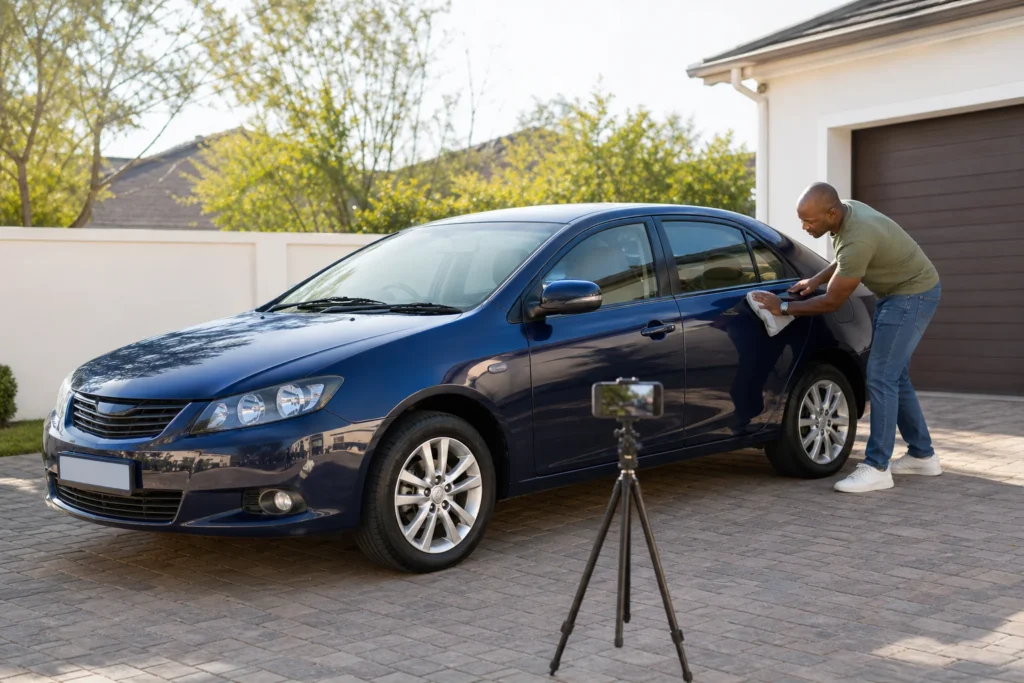
Wash the exterior, clean the glass and wheels, vacuum the cabin and remove personal belongings. Photograph the car in open shade or soft daylight against a simple background. Use horizontal images and keep the camera level. Show the front, rear, both sides, three-quarter angles, cabin, dashboard, luggage area, wheels and engine bay.
Include close-ups of relevant wear rather than hiding it. Do not use aggressive filters that misrepresent paint colour or condition. A buyer should recognise the same vehicle at the viewing.
Write an advert that answers real questions
Lead with the exact vehicle identity and the most useful ownership facts. Mention service history, spare keys, plan or warranty status, tyre condition, notable features and the reason for selling if you are comfortable doing so. Avoid claims such as “accident-free” unless you can support them.
- Use a phone number and email account you can monitor consistently.
- Do not publish your full home address or identity-document details.
- Never upload registration papers with personal information visible.
- Keep the conversation on a traceable channel until the buyer is verified.
Screen enquiries and control the viewing
Ask the buyer’s name, what they want to inspect and when they can meet. Arrange viewings in daylight at a secure, populated location and tell another person where you are. Have someone accompany you where possible. Do not hand over keys, original documents or the vehicle while you are distracted.
For a test drive, verify the driver’s licence, agree on the route and accompany the driver. Confirm that your insurance arrangements are appropriate. If the buyer wants an independent inspection, agree on a reputable workshop and remain involved in moving the vehicle.
Treat payment confirmation as a security step
Do not rely on a screenshot, SMS or emailed proof of payment. Confirm cleared funds through your own bank using a trusted channel. Be alert to overpayments, third-party collections, requests for refunds and pressure to release the car outside normal banking processes.
Use a written sale agreement identifying the vehicle, parties, price, date, known condition and included items. Keep copies of the signed documents and complete the required ownership-change process. If finance is outstanding, follow the finance provider’s settlement and release instructions.
Complete a documented handover
Only hand over the vehicle, keys and documents when the agreed payment and paperwork are complete. Photograph the odometer, note the date and time, and have both parties sign a handover record. Remove personal information from the infotainment system, navigation history, paired phones and connected apps.
A professional sale is not rushed. If an enquiry becomes threatening, inconsistent or too complicated, stop. A genuine buyer will understand reasonable verification.
Ready to reach active shoppers? Start your vehicle listing on Auto Car Finder.