
The South African Road-Trip Vehicle Checklist: Before You Leave
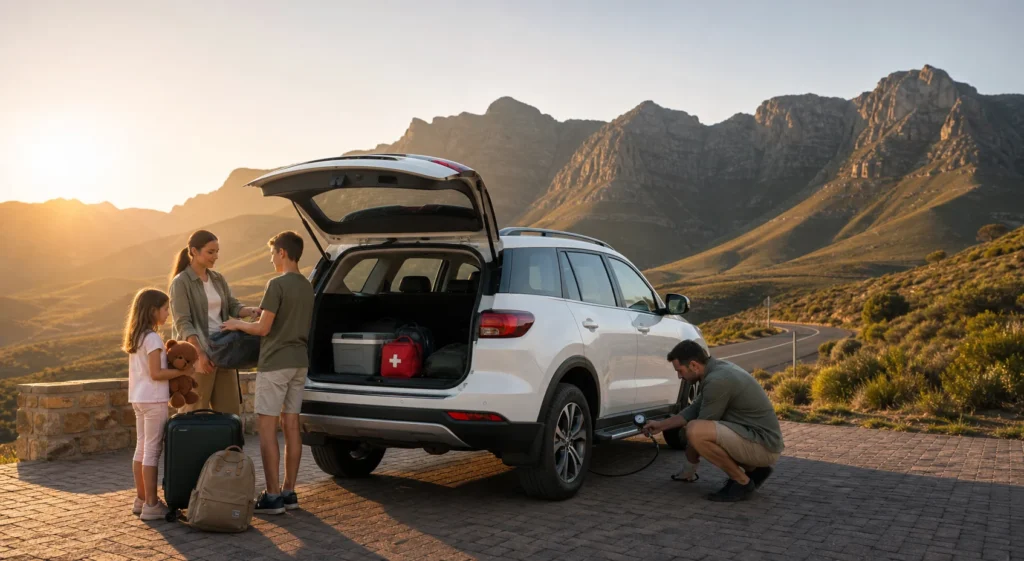
A successful road trip begins before the luggage goes into the boot. Long distances, heat, changing weather and unfamiliar roads expose small maintenance problems and poor planning. A structured check several days before departure gives you time to correct issues without delaying the journey.
Book maintenance early
If a service is due soon, arrange it well before departure and tell the workshop about the planned distance and route. Ask for the tyres, brakes, battery, cooling system, belts, hoses, lights and fluid levels to be inspected according to the vehicle’s requirements. Resolve warning lights and unusual noises rather than hoping they disappear on the open road.
After any work, drive the vehicle locally and check for warning messages, leaks or changes. The evening before departure is not the ideal time for major repairs or unfamiliar accessories.
Inspect tyres—including the spare
Check tyre pressures when cold and use the pressure specified for the vehicle and expected load. Inspect tread and sidewalls for damage, bulges and uneven wear. Confirm that the spare wheel is correctly inflated or that the supplied repair kit is complete and within date.
Locate the jack, wheel spanner, locking-wheel key and safe lifting points. If you do not know how to change a wheel safely, roadside assistance is a better plan than learning beside fast-moving traffic.
Check visibility and lighting
Clean all windows and mirrors inside and out. Top up the washer fluid, inspect wiper blades and test headlamps, brake lights, indicators, fog lamps and number-plate lights. Good visibility matters in rain, dust and early-morning glare, not only at night.
Plan the route with alternatives
Review road conditions, expected weather, tolls, fuel or charging stops and safe rest points. Download offline maps for areas with weak signal and share the route and arrival estimate with someone you trust. For an EV, confirm connector compatibility, operating status, payment access and backup chargers; do not plan around a single charging point.
Avoid setting an arrival time that encourages speeding or skipping breaks. Add margin for congestion, roadworks and family stops.
Pack for access, not just capacity
Secure luggage so it cannot move under braking and keep the driver’s rearward view clear. Heavy items should be low and properly restrained. Do not exceed the vehicle’s load or towing limits, and adjust tyre pressures only according to the manufacturer’s load guidance.
- Keep water, essential medication and a basic first-aid kit accessible.
- Carry charging cables for phones and a charged power bank.
- Pack a torch, reflective warning equipment and suitable clothing.
- Keep roadside-assistance and insurance contact details available offline.
Prepare the driver and passengers
Start rested and rotate qualified drivers where possible. Take regular breaks before fatigue becomes severe. Every occupant should use the correct restraint, and child seats should be installed according to their instructions. Pets and loose objects should also be safely restrained.
Set navigation, climate control and audio before moving. If something needs attention, stop in a safe place rather than operating a phone while driving.
Do a final departure walk-around
Look for low tyres, leaks, open windows, unsecured roof loads and lights left on. Confirm fuel or charge level, range, licence validity and that required documents are available. Set mirrors and seats after the vehicle is loaded because its stance and visibility may have changed.
Know what to do if the vehicle stops
Move out of traffic if it is safe, switch on hazard lights and make occupants visible without placing them in danger. Contact roadside assistance and give a clear location. Do not attempt repairs beyond your ability, especially on a busy road or unfamiliar high-voltage vehicle.
The aim is not to carry an entire workshop. It is to leave in a well-maintained vehicle, with a realistic route and the information needed when plans change. A calm journey is part of the holiday.
If your current vehicle no longer fits the family or the journey, compare practical replacements on Auto Car Finder well before the next trip.